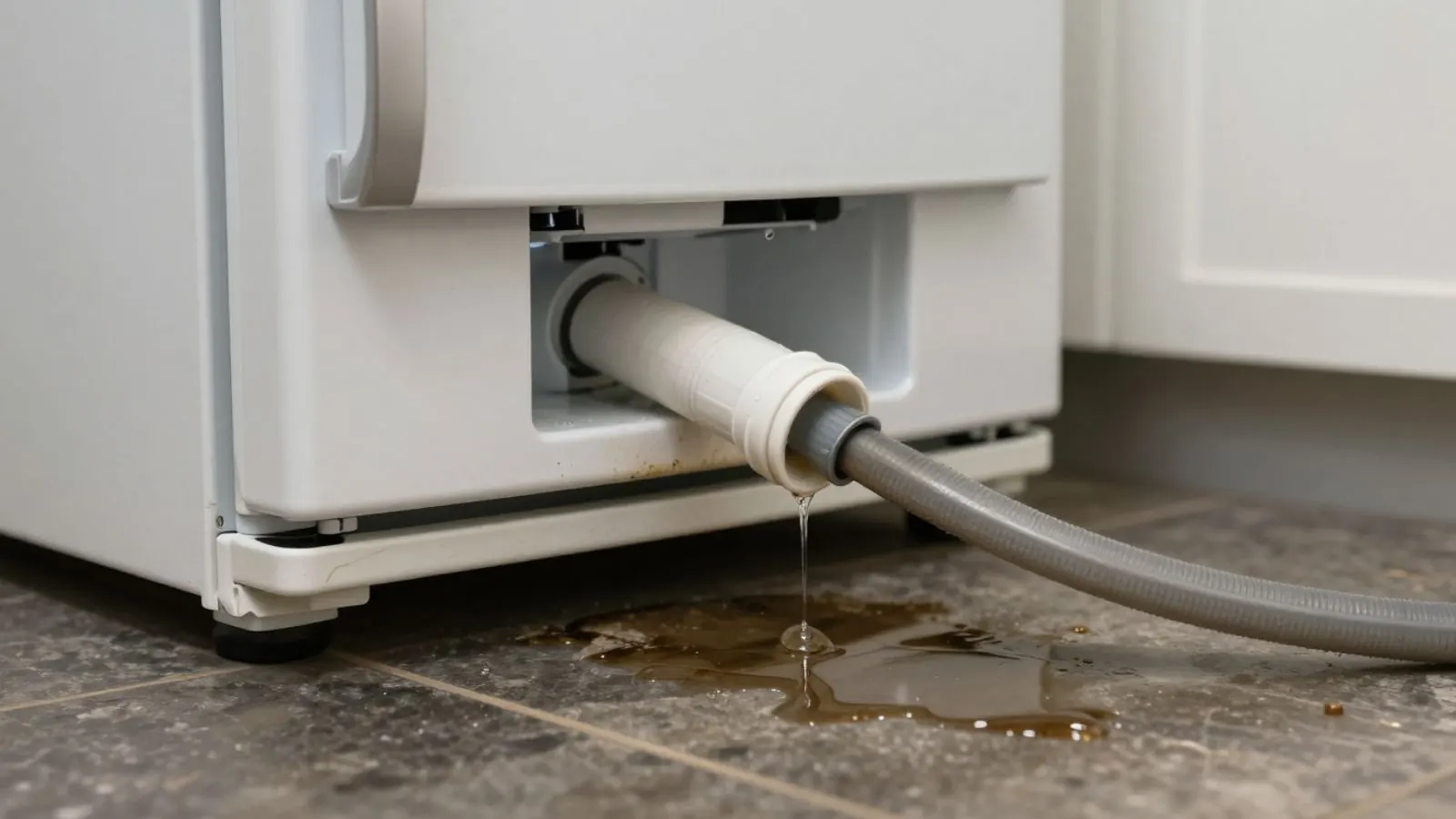
Why Appliance Leaks Do So Much Damage
Most appliance leaks are slow. A cracked washer hose, a loose dishwasher drain line or a split ice maker tube leaks onto a floor that nobody looks at, so water spreads under the machine and into the wall before a stain shows.
Bellflower has 25,220 housing units according to the 2020 census, and the city's housing element reports that about 61 percent are renter occupied. Many of those units have laundry closets and kitchens stacked over living spaces, so one failed hose can wet a floor and a ceiling below.
Where Appliance Water Hides
| Appliance | Where water usually goes |
|---|---|
| Washing machine hose or drain | Under the machine, into the wall behind and through the subfloor. |
| Dishwasher supply or drain line | Into the cabinet base, the toe kick and the floor beside it. |
| Refrigerator ice maker line | Under the unit and along the back wall, often unseen. |
| Garbage disposal or sink drain | Into the cabinet floor, which is often particleboard. |
| Water softener or filter line | Onto a garage or closet floor and into stored items. |
Safety Steps Before You Call
Close the appliance's shut-off valve, usually a small valve behind or under it. If you cannot reach it, close the home's main water valve. Unplug the appliance only if the floor around the plug is dry and you can reach it without stepping in water.
If the outlet or cord is wet, leave it alone and switch off the breaker if the panel is safe to reach. Stay out of any room where water is near an outlet, and call 911 for a smell of burning or sparks.
- Close the valve to the leaking machine.
- Pull the machine out only if it is safe and the floor is not slippery.
- Wipe the floor of standing water and take photos first.
- Put foil or plastic blocks under furniture legs on wet carpet.
- Tell your property manager if you rent.
How We Dry After an Appliance Leak
A crew moves the appliance aside, extracts water and checks the floor, cabinet base and wall with a moisture meter and a thermal camera. Particleboard cabinet bases that have swelled are usually removed, and wet baseboard and pad come out.
Air movers and dehumidifiers then run until the readings reach the drying goal. Wall cavities behind a washer are often dried through small openings. We use the ANSI/IICRC S500 reference as a guide for these steps and not as a certification claim.
Choosing the Right Service Page
Water on a tile or wood floor with no wall damage is mostly extraction and drying, covered under emergency water removal. Water that reached cabinets or flooring finishes has overlap with kitchen water damage restoration.
If an air conditioning drain line caused the problem, the drying steps on this page apply in the same way, and the plumber or HVAC technician fixes the line.
What Changes the Cost
The factors are how long the appliance leaked, whether the water stayed on the floor or reached the wall and cabinet, the flooring type, how many rooms or floors below were affected, and how many drying days follow.
A washer hose that failed during a cycle and was caught in minutes is a short job. A refrigerator line that dripped for a month behind a unit is a different one. Scope and price are explained before work starts.
Insurance Fit
Sudden appliance failures, such as a hose that bursts during a wash cycle, are often covered as sudden and accidental water damage. A slow drip that went unseen for months is often treated as maintenance, and the appliance itself is rarely covered.
The California Department of Insurance provides consumer help for claim questions. Photos of the hose, the floor and the date you found it are useful.
Mistakes and Prevention
Pushing the machine back against a wet wall hides the problem. Using a heater to dry cabinets often warps them. Ignoring a small puddle for a week gives mold time to start.
Replace rubber washer hoses with braided ones, leave a few inches behind the machine so leaks can be seen, and check the cabinet floor under a dishwasher every few months.
Appliance Leak Cleanup in Nearby Towns
Crews also serve Downey and Paramount, where many apartment buildings share walls and floors.
Appliance Leak FAQ
Yes. The dispatch line is open 24 hours a day, every day. Same-day response is offered when crews are available, and no arrival time is promised.
No. An appliance repair technician or the manufacturer handles the machine. We dry the area and remove ruined materials.
Shut off the valve, then call. A leak that goes through a floor affects both units, and the crew may need access to the unit below.
Solid wood sometimes dries flat. Particleboard that has swelled rarely recovers and is usually replaced.
A moisture meter reading compared with an unaffected spot tells you. Surface feel is not reliable.