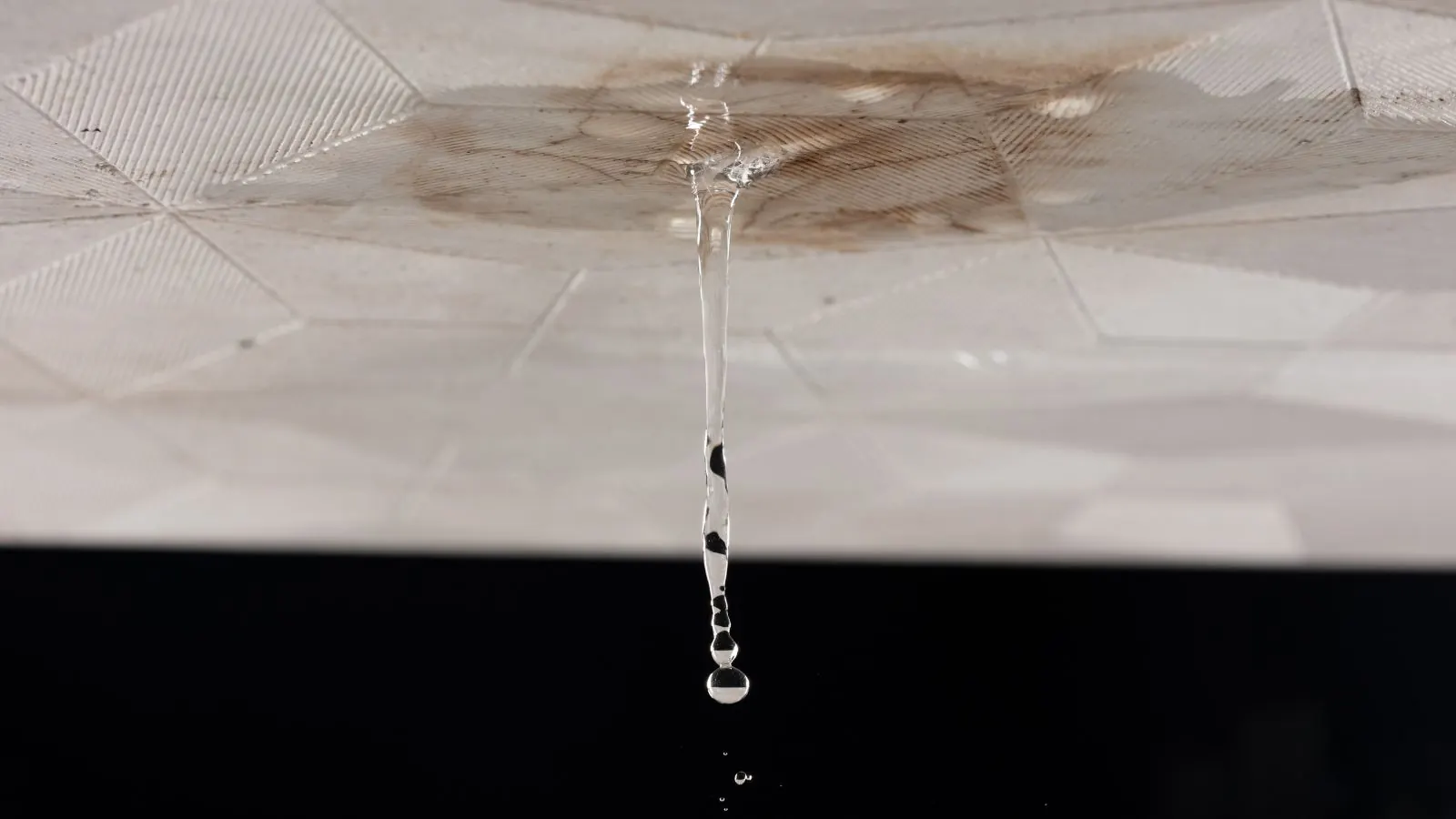
Why Roofs Leak in a Dry Climate
NOAA 1991 to 2020 climate normals for Long Beach show about 12 inches of rain in a year, with about 10.5 inches falling between November and March. A roof can sit dry for months and then take its whole year of rain in a few storms.
That pattern is hard on roofs. Sun bakes sealants, shingles and flashing through the long dry months, and the first heavy rain of the season finds every crack at once. News coverage of National Weather Service data reported record daily rainfall at Long Beach Airport in 2024, which is the kind of day that exposes a worn roof.
Reading the Signs Below the Roof
A brown ring on a ceiling, bubbling paint, a drip during rain or a musty smell in a closet all point upward. The stain is almost always smaller than the wet area, and the leak point on the roof is often several feet from where the water appears.
Water runs down rafters and across the top of the ceiling before it drops. Insulation above the stain acts like a sponge and keeps feeding the ceiling after the rain stops.
Is it the roof or a pipe?
A stain that appears only during or after rain usually points to the roof. A stain that grows on dry days points to plumbing or an air conditioning line. A good moisture check can separate the two before anything is torn out.
Safety Steps During a Roof Leak
Stay off the roof. Wet roofs are slippery, and a fall is a far bigger problem than a wet ceiling. Move furniture and electronics out from under the drip and set a bucket or a tub below it.
If the ceiling is bulging and holding water, leave it to a crew to release it safely. A pinhole in a sagging ceiling can let several gallons come down at once. If water is near a light fixture or a ceiling fan, keep the power off to that circuit and stay out of the room.
Catch the water
Use a bucket, then check it often. A slow drip can fill a bucket overnight.
Cover the roof only from the ground
A roofer can tarp it. Do not climb up to do it yourself.
Photograph the stain
Mark the edge of the stain with a pencil and note the time so spread is visible later.
Call your insurer
Ask what temporary repairs are expected and keep the receipts.
What the Cleanup Involves
The crew checks the ceiling, wall tops and attic hatch with a moisture meter and thermal camera. Wet insulation is bagged and removed, saturated ceiling drywall is cut out, and attic framing is dried with air movers and dehumidifiers.
The ANSI/IICRC S500 standard is the published reference for how wet materials are classified and dried, and we use it as a guide. Cleanup ends when readings show the framing and drywall have reached the drying goal.
Where Roof Work Ends and Our Work Begins
We do not repair roofs, and the dispatcher will say so on the first call. A roofer finds the entry point and seals it. We dry what the water touched.
Do the roof first when rain is forecast, since drying a ceiling under an open leak is wasted effort. Once the roof is sealed, the finish work is covered under ceiling water damage repair. For water that came from a storm drain or street, see flood damage restoration.
What Changes the Cost
Roof leak cleanups vary by how much insulation is wet, how many ceiling sections must come out, whether the attic is easy to reach, and how many drying days follow. A leak caught after one storm costs less to dry than a leak that soaked through three.
Scope and price are explained before work starts.
Insurance Fit
Many homeowners policies treat rain entering through a storm-damaged roof as sudden damage, while a roof that failed from age and wear is often excluded. Insurers may ask for the roofer's report on how the water got in.
Photos of the roof and ceiling, dates and receipts for temporary repairs help. Check your own policy or ask your insurer, since we do not promise coverage.
Mistakes and Prevention
Painting over a stain is the most common mistake. It hides a wet ceiling and the stain returns. Another is leaving wet insulation in place because the ceiling looks dry.
Before the rainy season, have a roofer check flashing, vents and worn shingles. Clear gutters and keep tree limbs off the roof surface.
Roof Leak Cleanup in Nearby Towns
Crews also serve Norwalk and Cerritos when storms hit the whole region.
Roof Leak Water Damage FAQ
Yes. The dispatch line is open 24 hours a day, every day, including during storms. Same-day response is offered when crews are available, and no arrival time is promised.
No. Roofing is a separate trade. We recommend calling a roofer to tarp or repair the roof and calling us to dry the inside.
Do not do it yourself. A crew can release the water in a controlled way and catch the debris.
Not if the cavity dried and the roof was sealed first. Paint applied over damp drywall often bleeds through.
Usually, since wet batts lose their value and hold moisture against the framing. Dry insulation that stayed clean can stay.