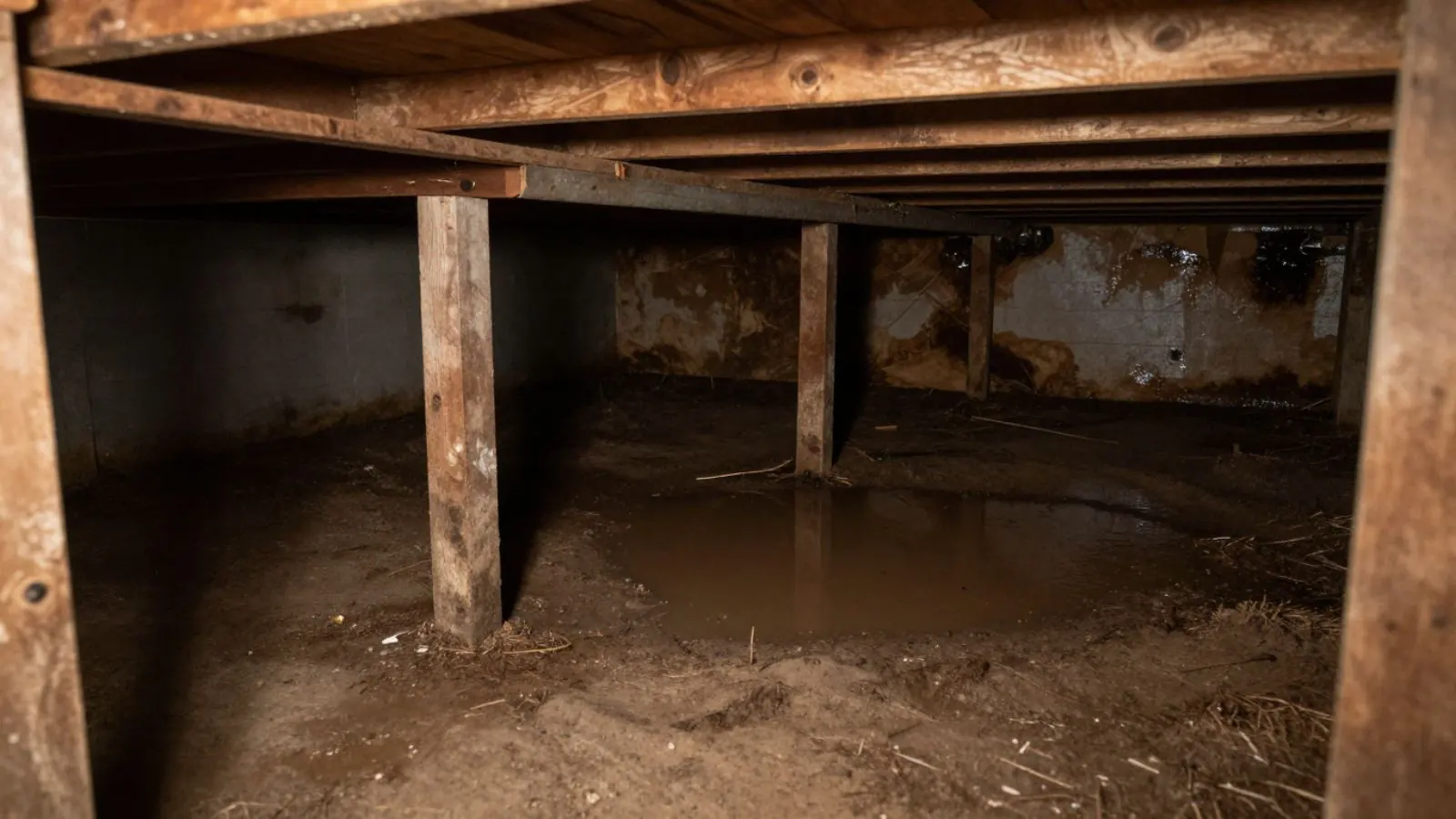
Crawl Spaces in Bellflower Homes
Not every home here has one. Newer homes and many mid-century houses sit on slabs, while older houses often have raised floors with a shallow crawl space. The city's draft housing element says most Bellflower homes were built before 1970, which is why crawl space water comes up here more than basement water does.
Bellflower has no true basement flooding problem. If your home has a lower level, see flood damage restoration for the water-from-outside case.
How Water Gets Under the Floor
The usual routes are a leaking supply or drain line under the house, a failed water heater or washer drain, rain that runs under the foundation vent, and a lot that slopes toward the house. NOAA normals for Long Beach put about 10.5 of the year's 12 inches of rain between November and March, so wet-season soil is the main outside source.
The San Gabriel River was historically known to flood along Bellflower Boulevard, a reminder that low ground near the river has seen water before. Ask the city about your lot if you are unsure.
Signs That Water Is Under the House
| What you see | What it usually means |
|---|---|
| A musty smell in rooms above | Moisture or growth in the crawl space is rising. |
| Floors that feel soft or bouncy | Subfloor or joists have taken on water. |
| Visible damp soil or puddles through the access door | A leak or intrusion is present now. |
| Insulation sagging between joists | Water has soaked it and its weight is pulling it down. |
| Cupped hardwood above | Moisture from below is reaching the boards. |
Safety Steps Before Anyone Goes Down
Do not enter a wet crawl space without turning off power to circuits that run through it. Wiring, a water heater and sometimes gas piping share the space. Tight spaces carry fall, air and cramped-work risks, so send the crew rather than going in yourself.
Shut off the main water if a pipe is the source. Take photos from the access door with a flashlight and note any smell.
- Shut off the main if you suspect a pipe.
- Switch off breakers for crawl space lighting and outlets.
- Keep the access door closed to keep dust and odor out.
- Do not run fans that pull crawl space air into the home.
- Call a plumber for pipe leaks and us for the water.
How the Cleanup Works
A crew enters with lights and protective gear and checks the soil, joists and subfloor with a moisture meter. A pump or wet vacuum removes standing water, and wet insulation is bagged and carried out.
Air movers and dehumidifiers dry the framing, and in some cases a vapor barrier is checked so it does not trap water. We use the ANSI/IICRC S500 reference as a guide and not as a certification claim. Rebuilding insulation and flooring comes after the readings reach the goal.
What We Do Not Do
We do not install drainage systems or foundation repairs. If water keeps entering, the lot or foundation needs a different trade. Our work is the drying and the removal of what water ruined.
If the water came from a pipe, burst pipe water damage covers the plumbing side. Floor finishes above are handled under water damage repair.
What Changes the Cost
Access matters most, since a low crawl space takes longer to work in. The other factors are how much water is present, how much insulation is wet, whether mold has started, how large the footprint is and how many days of drying the readings call for.
Scope and price are explained before work starts.
Insurance Fit
A pipe that fails under the house is often treated as sudden and accidental, while groundwater that seeps in after rain is often considered flood or surface water. The California Department of Insurance says flood is generally excluded from standard homeowners policies and bought as a separate policy.
Because the cause drives coverage, photos and a plumber's note about the cause help.
Mistakes and Prevention
Do not seal the crawl space vents or the access door to "contain" the smell. Do not leave wet insulation hanging. Do not assume that a dry surface above means a dry space below.
Keep gutters and downspouts away from the foundation, check under the house after heavy rain and fix leaks soon after you find them.
Crawl Space Cleanup in Nearby Towns
Crews also serve Downey and Lakewood, where many older homes have raised floors.
Crawl Space Water Damage FAQ
Yes. The dispatch line is open 24 hours a day, every day. Same-day response is offered when crews are available, and no arrival time is promised.
Look for a small access door or vents in the foundation. Many older homes have one and newer slab homes do not.
No. We dry and clean. Drainage and foundation work are separate trades.
Usually not, because wet batts hold moisture against the joists.
A musty smell often means moisture and sometimes growth. Call so the readings can be checked.