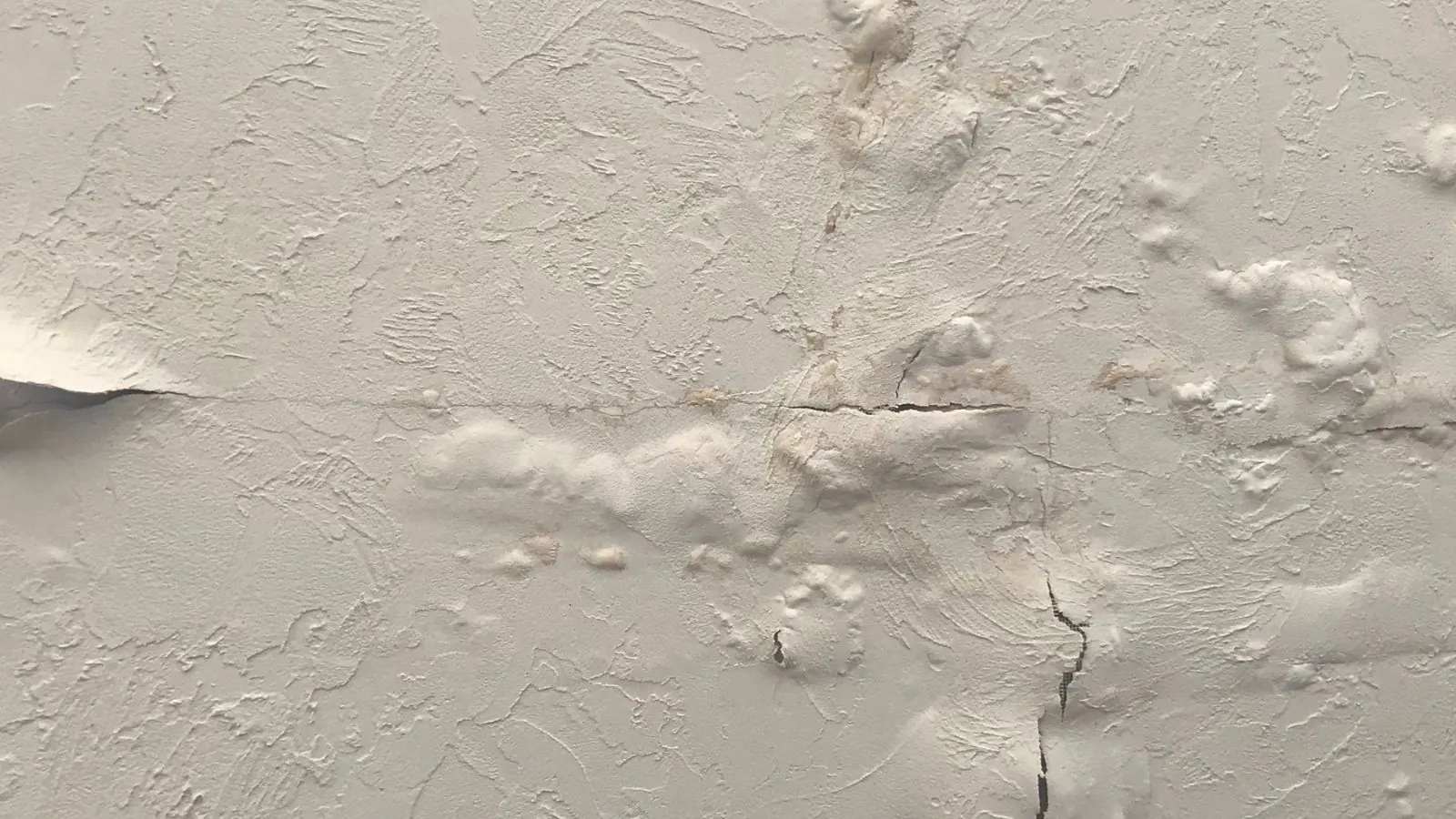
How Water Gets Into Walls
Water gets into walls from supply lines, drain lines, window and door leaks, roof leaks that run down a wall and flooding that wicks up from the floor. Paper-faced drywall absorbs it quickly and loses strength when wet.
The city's draft housing element says most Bellflower homes were built before 1970, and the 2020 census counted 25,220 housing units. Older walls may have plaster, lath or layers of paint that change how repair is scoped.
Reading a Wet Wall
| What you see | What it usually means |
|---|---|
| Paint bubbling or peeling | Moisture is behind the paint film. |
| A soft or crumbly spot | The gypsum has absorbed water and lost strength. |
| A brown stain with a line at the edge | A past leak has dried and may have been repainted. |
| Swollen baseboard | Water is in the wall base or came from the floor. |
| A musty smell with no visible damage | Moisture in the cavity, often behind a cabinet or tub. |
Safety Steps for a Wet Wall
Find and stop the source if you can. Keep power off to outlets and switches on a wet wall, and do not drill or cut without knowing where wiring and pipes run. A wet outlet is a shock risk.
Do not press on bulging drywall, since it can release water and debris. If wiring is wet or there is a burning smell, leave and call 911.
- Close the water source and move furniture off the wall.
- Switch off the breaker to wet outlets if the panel is safe to reach.
- Mark the edge of the stain and photograph it with the date.
- Do not caulk or paint over a damp wall.
- Call your insurer before any cutting.
How Walls Are Dried and Repaired
Testing starts on the wall face. A pin or pinless meter and an infrared camera show how high the water climbed, and then the baseboard is pulled and the board is cut at a height where readings are normal. Soaked batts are bagged, and air movers, dehumidifiers and sometimes small injection ports dry the stud bays.
Drying follows the ANSI/IICRC S500 reference, which we use as a guide and not as a certification claim. When readings reach the goal, new drywall is hung, seams are taped and finished, and the wall is primed and painted.
Patch or Replace?
A small, clean, firm area can sometimes be dried and sealed. Drywall that is soft, crumbling, moldy or contaminated is cut out. Textured walls are matched as closely as the old finish allows.
The City of Bellflower's permit handout lists plumbing, electrical and water heater work as needing permits but does not address drywall directly. Call (562) 804-1424, extension 2006, to ask about your case.
Related Pages
The general rebuild process is explained under water damage repair. If the damage is on a ceiling, ceiling water damage repair covers that case, and if the wall is wet from a flooded floor, see water mitigation.
What Changes the Cost
The cost depends on how much wall is wet, whether insulation is involved, the finish and texture, the height and number of walls, and how many drying days the readings call for.
A single patch after a clean leak is far simpler than a wall that sat wet for weeks. Scope and price are explained before work starts.
Insurance Fit
Sudden leaks from a pipe or a storm are often covered, while slow leaks and flood are often treated differently. The California Department of Insurance provides consumer help with claim questions.
Photos of the wall before cutting and the moisture readings show the extent of the damage and support the scope.
Mistakes and Prevention
Covering a damp wall with paint or wallpaper is the main mistake. Another is closing a wall before it is dry, which can grow mold. A third is cutting without checking for wires and pipes.
Fix leaks soon, watch for stains and ventilate bathrooms and laundry rooms.
Drywall Repair in Nearby Towns
We also repair walls in Downey and Lakewood.
Wall and Drywall FAQ
The dispatch line is open 24 hours a day for the wet phase of the job. Same-day response is offered when crews are available. Finish work follows once the wall is dry.
Clean, firm drywall caught quickly sometimes can. Soft or crumbling board needs to be replaced.
Yes. Primer and paint are part of a finished repair, and the crew matches the existing color as closely as possible.
Crews match texture as closely as possible. Older finishes may not match perfectly.
The city's handout does not address drywall directly. Ask Public Works if plumbing or electrical work is also involved.