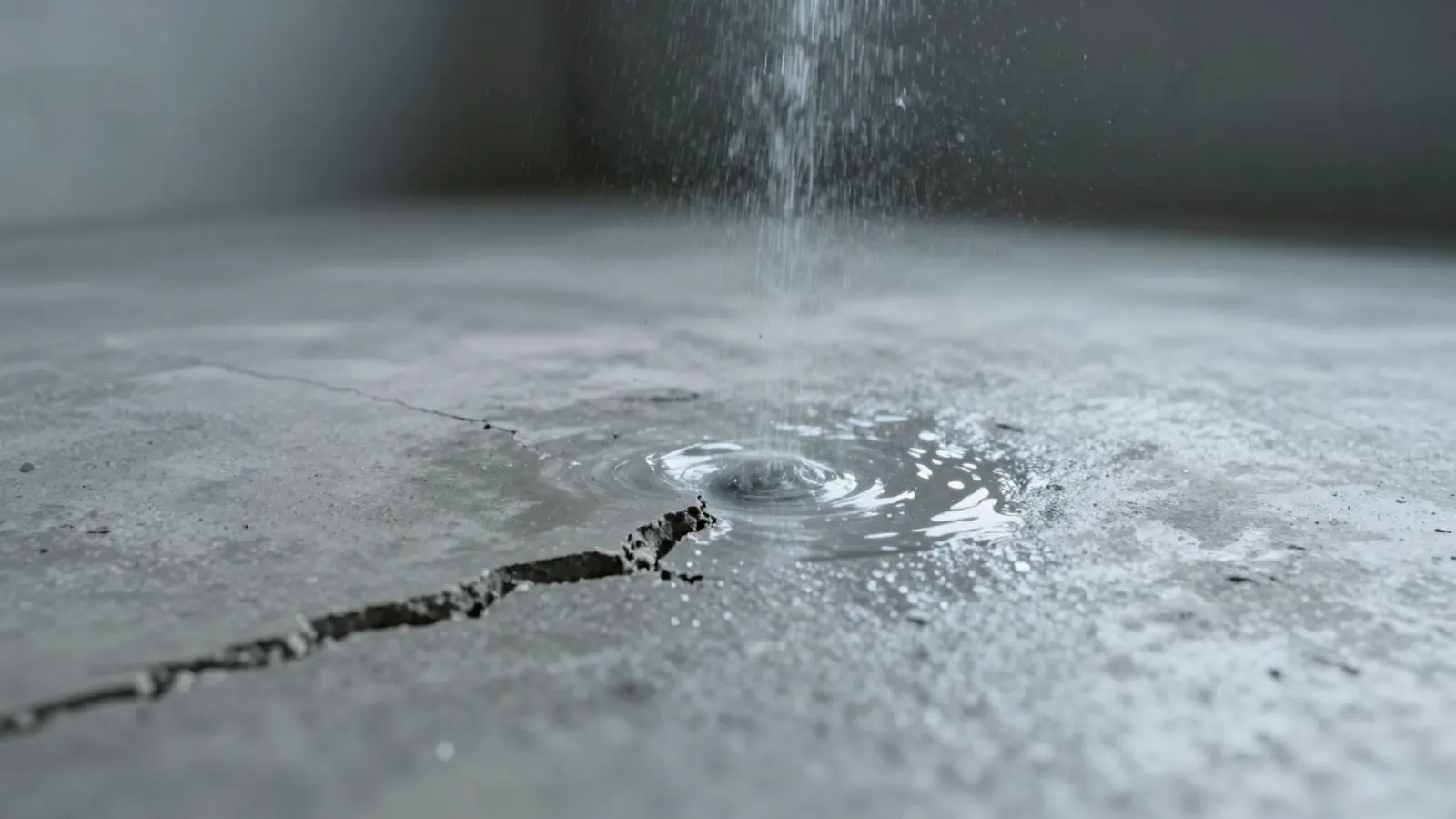
How Common Slab Leaks Are Here
We want to be plain about this. Slab leaks are real in Southern California, but they are not the most frequent cause of water damage in Bellflower. A supply line behind a wall, a failed hose or a water heater leak is more common, and the page for burst pipe water damage covers those.
Some Bellflower homes sit on a concrete slab and others on a raised foundation, so check which one you have. The city's draft housing element reports that most homes were built before 1970, and older pipes under a slab can corrode or shift.
Signs of a Slab Leak
| What you see | What it usually means |
|---|---|
| A warm spot on a floor | A hot water line under the slab may be leaking. |
| A water bill that rises for no reason | Water is escaping somewhere between the meter and the fixtures. |
| The sound of running water with fixtures off | A pressurized line is leaking. |
| Cracked tile or lifted flooring | Water under the slab is pushing up or softening the base. |
| Damp carpet along a wall | Water has moved through the slab or under the wall plate. |
Safety Steps for the First Hour
Shut the main valve and check whether the meter still moves. If it does, the leak is likely between the meter and the house. Do not dig or drill into the slab yourself, since water lines, gas lines and electrical conduit can share the same space.
If a floor is wet near outlets or a panel, stay out and switch off the breaker only if you can reach it safely. The city has four water companies, and Public Works at (562) 804-1424 can tell you which one reads your meter.
- Close the main and watch the meter for movement.
- Keep the area dry and take photos of damp spots.
- Call a plumber who does leak detection.
- Do not run heavy equipment over a possible leak.
- Call us for drying once the plumber has found the line.
How the Water Damage Is Handled
Our work is the drying. A plumber finds and repairs the line, which may involve breaking into the slab or rerouting the pipe through the attic. We extract any standing water, pull wet carpet and pad, and dry the subfloor, walls and baseboards.
Crews use a moisture meter and a thermal camera, and run air movers and dehumidifiers until readings reach the drying goal. This follows the ANSI/IICRC S500 reference as a guide and not as a certification claim.
Concrete Dries Slowly
Concrete holds water and releases it slowly, so a slab that was wet can push moisture into flooring for weeks. Hardwood and laminate over a wet slab can cup or buckle, and carpet pad can stay damp.
Readings from the slab and from the flooring tell you when it is safe to install new material. Rebuilding is covered under water damage repair.
What Changes the Cost
The cost factors are how long the leak ran, how much flooring is affected, whether the slab itself needs extended drying, whether walls are wet and how many days of equipment the readings call for. The plumber's work is separate and is priced by the plumber.
Scope and price are explained before work starts.
Insurance Fit
Policies treat slab leaks differently. Many homeowners policies cover water damage from a sudden pipe failure but may exclude the cost of reaching and repairing the pipe or the slab. A leak that went on for a long time can be treated as gradual.
This is not flood coverage, which the California Department of Insurance notes is generally excluded from standard homeowners policies. Ask your insurer how it classifies leaks from under a slab.
Mistakes and Prevention
The common mistake is replacing flooring before the slab has dried. Another is ignoring a rising water bill because nothing looks wet.
Check your bill each month, listen for running water with everything off, and ask a plumber about pressure if you see repeated pinhole leaks.
Slab Leak Cleanup in Nearby Towns
Crews also cover Cerritos and Norwalk.
Slab Leak Water Damage FAQ
Yes. The dispatch line is open 24 hours a day, every day. Same-day response is offered when crews are available, and no arrival time is promised.
No. A plumber locates and repairs the leak. We dry the damage and coordinate timing with the plumber.
They happen but are not the most common cause. If you do not have a slab foundation, the leak is likely elsewhere.
It varies a lot with thickness and moisture. Readings guide the work, not a calendar.
Sometimes if it is caught early and dried. Cupping, buckling or lifted boards are signs it may need replacement.