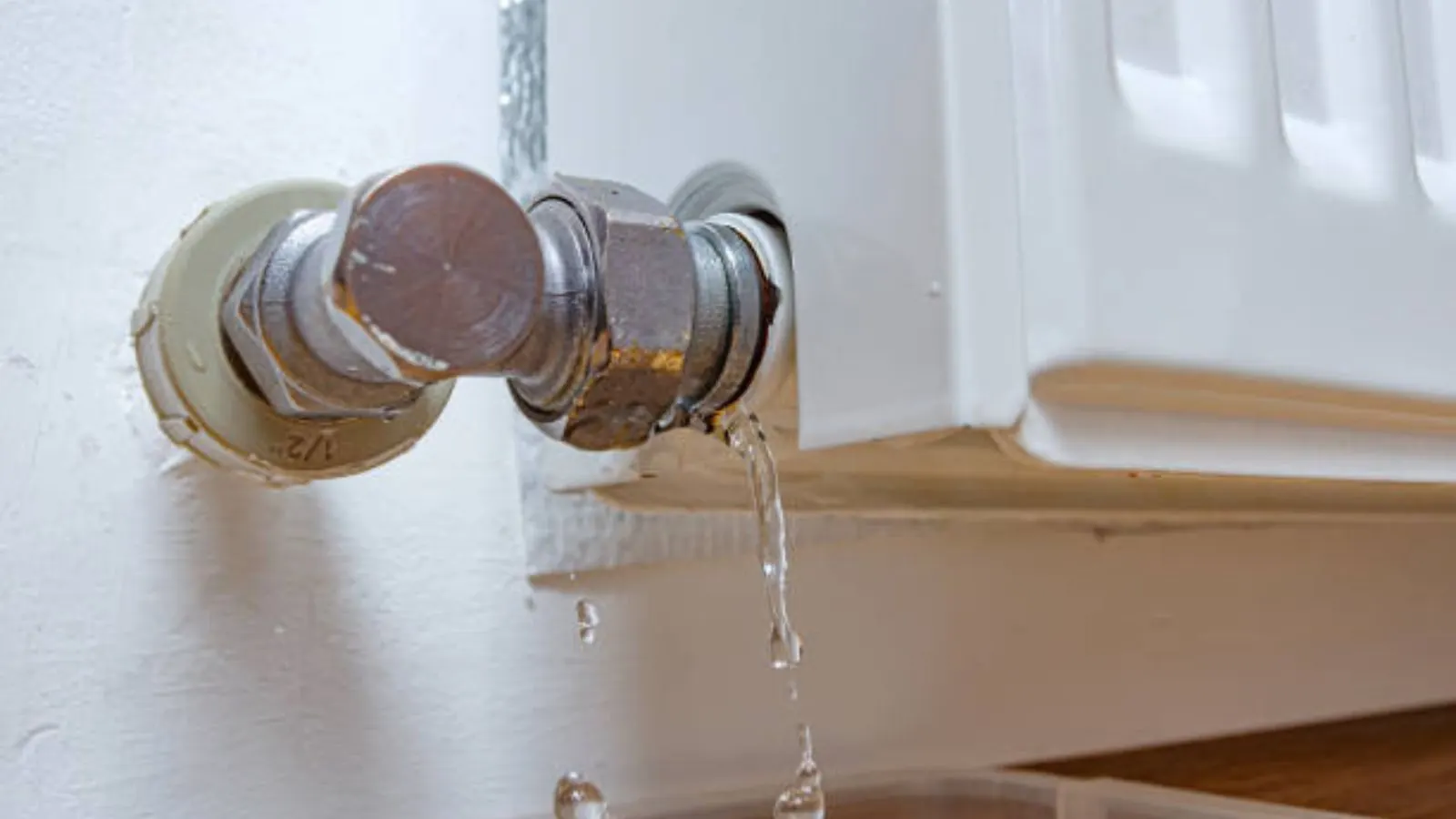
How Water Heaters Fail Here
Tank heaters wear out from the inside. Sediment and corrosion eat through the steel, and a small weep at the bottom or at a fitting becomes a steady leak. Many Bellflower units sit in garages, closets or utility rooms, which means water often reaches adjoining walls before anyone sees it.
The city's draft housing element says most homes were built before 1970, so some water heaters are replacements installed in older utility spaces with limited drainage. A floor drain is rare, so water spreads to carpet and drywall.
Signs of a Water Heater Leak
| What you see | What it usually means |
|---|---|
| Water pooling around the base | A tank leak or a failed drain valve. |
| Dripping from the relief valve pipe | Pressure or temperature is too high, or the valve is worn. |
| Rust streaks on the tank | Corrosion has started and the tank is near the end of its life. |
| A wet wall behind the unit | A fitting or connector is leaking into the wall. |
| Lukewarm water and a wet floor | The tank has lost water and the element or burner may be affected. |
Safety Steps for the First Hour
Turn off the cold water supply to the heater, usually a valve on top. For an electric unit, switch off its circuit breaker if you can reach the panel without standing in water. For a gas unit, set the control to off and leave if you smell gas.
Do not touch the unit or its wiring while the floor is wet. If water is near a panel or outlets, or you smell gas, leave and call 911 or the gas utility before you call us.
- Close the cold water inlet valve on the heater.
- Switch off the breaker or set gas control to off.
- Drain nothing yourself until the power or gas is off.
- Move boxes, tools and stored items off the floor.
- Call a plumber for the unit and call us for the water.
How the Cleanup Works
A crew pulls up standing water with extraction equipment, then checks drywall, baseboard and flooring with a moisture meter. Wet base trim and carpet pad usually come out, and any drywall that has wicked water is cut back to a dry line.
Air movers and LGR dehumidifiers then dry the room. In a garage, concrete is slow to release moisture, so the readings guide how long equipment stays. We use the ANSI/IICRC S500 reference as a guide and not as a certification claim.
Who Does What
We do not repair or replace water heaters. A plumber does, and the City of Bellflower's permit handout lists water heater work among the jobs that need a permit. Public Works can answer questions at (562) 804-1424, extension 2006.
If the water has reached a living space, the wider job is covered under emergency water removal. If it soaked a wall, water mitigation explains how drying is tracked.
What Changes the Cost
The main factors are how long the tank leaked, how far the water spread, whether carpet and drywall are involved, whether the floor is concrete or wood, and how many days of equipment the readings require. A tank that failed in an open garage dries much sooner than one that leaked inside a closet for a week.
Scope and price are explained before work starts.
Insurance Fit
A tank that bursts suddenly often falls under sudden and accidental water damage, while a leak that dripped for months may be treated as wear. The unit itself is often not covered even when the damage it causes is.
Keep the old unit or take photos of the failed part when you can, and ask your insurer what documentation they want.
Mistakes and Prevention
Do not leave a leaking heater running to see what happens. Do not use a wet shop vacuum on a floor near an electric unit. Do not assume a dry floor means a dry wall.
Flush a tank on a schedule your manufacturer recommends, check the relief valve pipe for drips, and replace a heater that is near the end of its life before it fails.
Water Heater Leak Cleanup in Nearby Towns
Crews also serve Lakewood and Norwalk.
Water Heater Leak FAQ
Yes. The dispatch line is open 24 hours a day, every day. Same-day response is offered when crews are available, and no arrival time is promised.
No. A plumber replaces the heater. We handle extraction and drying, and we can work around the plumber's schedule.
It is usually clean when the tank first leaks, but it can pick up dirt and debris from the floor. If it has sat for a long time, tell the dispatcher.
Often yes. Concrete holds moisture and can push it into walls and stored items. Readings show when it is dry.
Coverage depends on the cause and your policy. Sudden failures are often treated differently from slow leaks, so ask your insurer.